Skip to content


Brand spotlight
Meet Má + Lin: the linen brand born from two languages, one lockdown, and a decade of frustration
Yue had spent ten years watching the industry waste. Working as a fashion buyer in Paris and then London — most recently at JW Anderson — she had seen season after season of raw materials overbought, overstocked, and eventually destroyed. Fabrics sent to shredding stations not because they were worn out, but because they were simply dated. No transparency about where any of it came from. No way to trace a fabric back to the yarn mill, let alone the field where the flax was grown.
She knew she had to do something different. She just needed the moment.
That moment came in 2021, during the quiet of the pandemic, when Má + Lin was born.
Two languages, one obsession
The name itself tells the whole story. Má (麻) is the Chinese word for linen. Lin is the French. Put them together and you get Malin — which means clever in French. It's a brand name that holds Yue's entire world: a childhood in Chongqing, a career shaped by Paris and London, and a single-minded devotion to what she calls the world's oldest and most sustainable fabric.
Linen has been cultivated and woven for thousands of years. It requires no irrigation beyond rainfall, no pesticides, and produces virtually no waste — every part of the flax plant is used. It grows across Europe, where the climate suits it perfectly, and it has a natural breathability and durability that synthetic fabrics can't replicate. For Yue, choosing linen wasn't a compromise. It was the whole point.
Made to last, made to know
Every Má + Lin piece is ethically crafted in Portugal, using 100% certified European linen that carries the Master of Linen® certification — a guarantee that the entire production chain, from field to finished fabric, takes place in Europe under rigorous environmental and social standards.
But Yue goes further than certification. Her supply chain is fully mapped and publicly shared, from the farms where the flax is grown to the warehouse where your order is dispatched. This level of transparency is, still, extraordinarily rare in fashion. It exists at Má + Lin because Yue believes it isn't optional: every customer has the right to know exactly how and where their clothes were made.
Production is deliberately limited. Rather than following traditional fashion seasons — with their pressure to overproduce and their inevitable waste — Má + Lin combines pre-orders with small limited-edition runs, making only what is needed. Offcuts are repurposed wherever possible, and every garment is designed to be fully biodegradable at the end of its life. The circular economy isn't an aspiration here; it's the operating model.
The clothes themselves
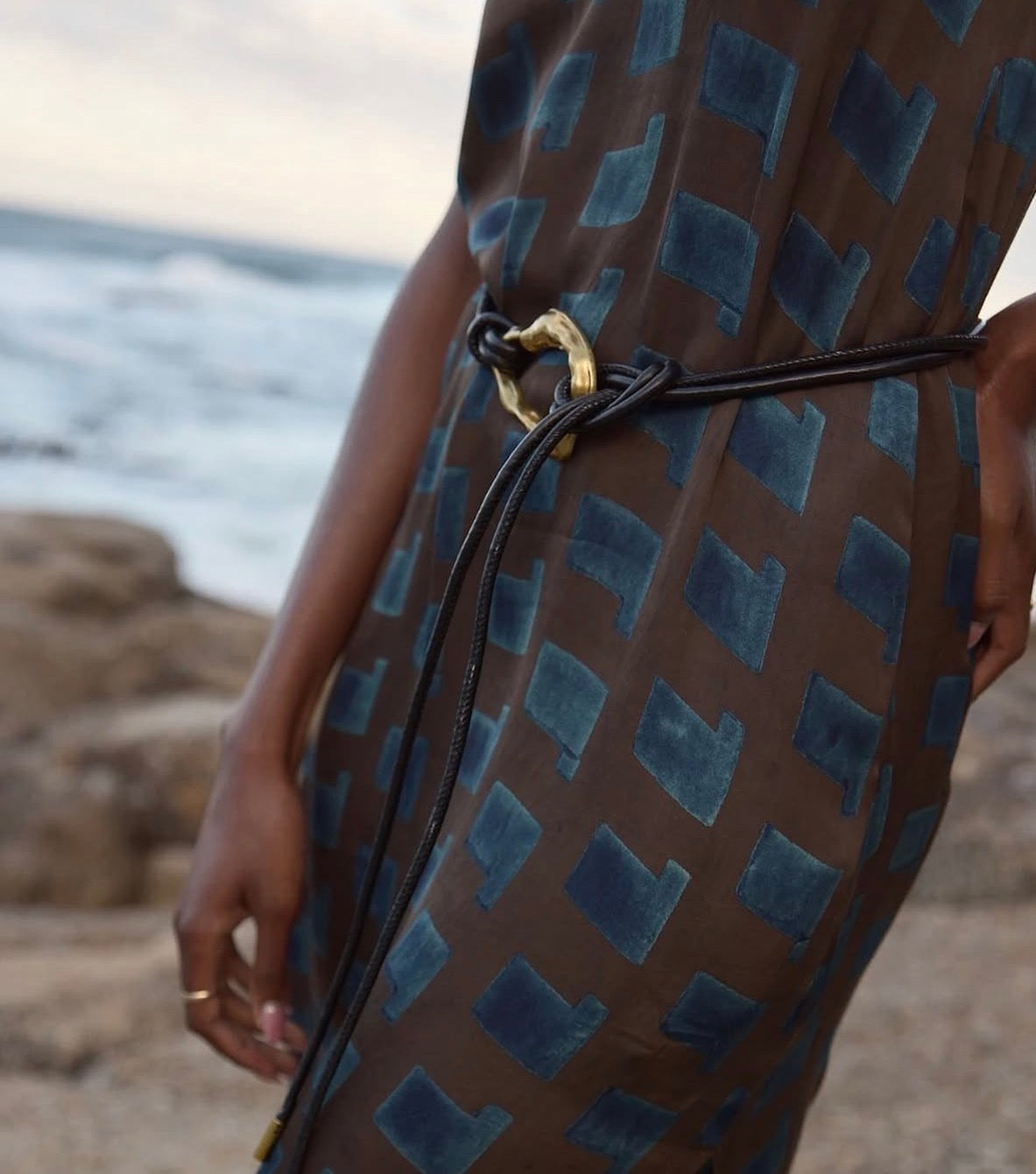
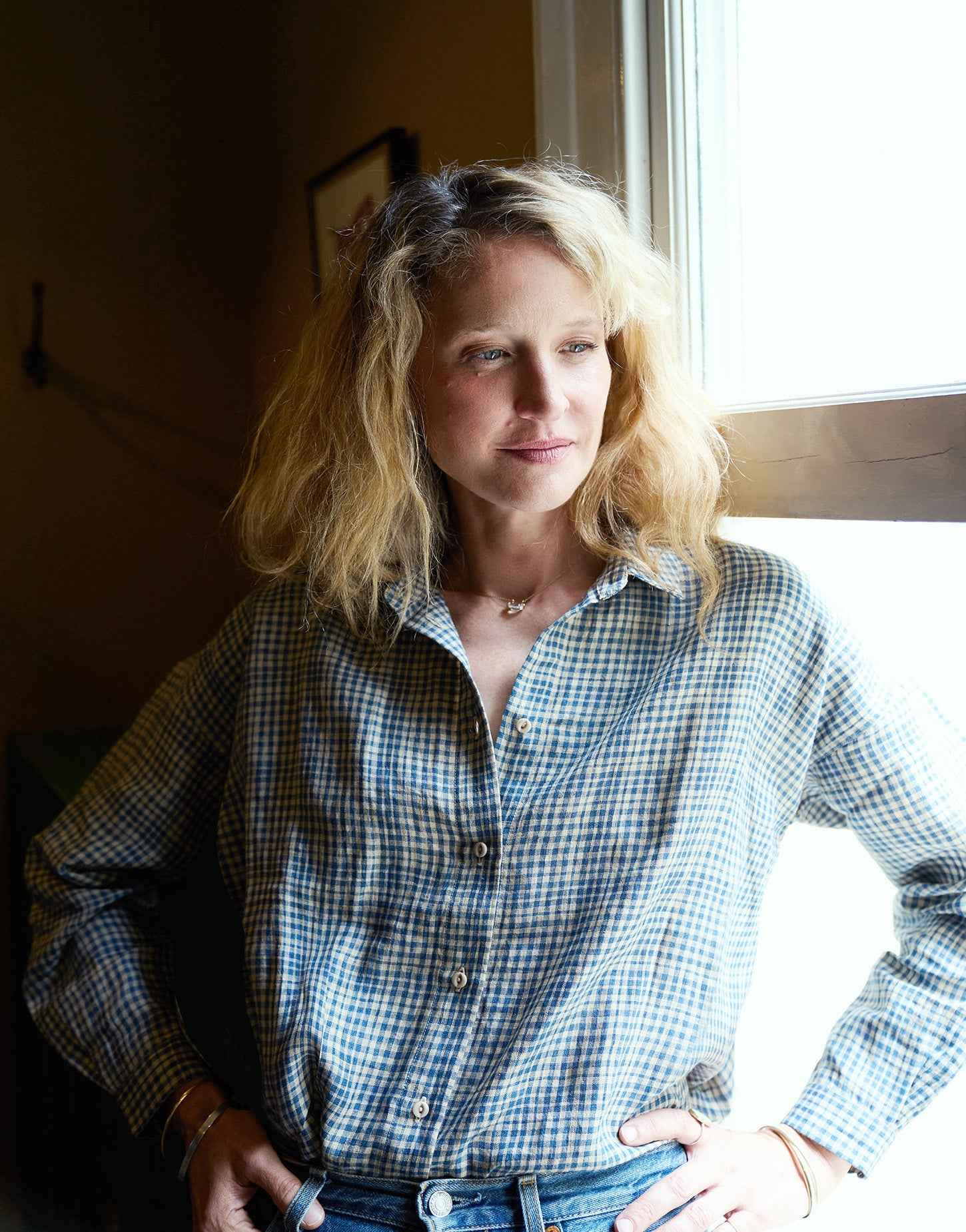
The aesthetic is French in its sensibility — clean, unfussy, quietly elegant. Peter Pan collars, wooden buttons, fluid silhouettes that work across ages, body shapes and occasions. The Frances blouse, the Claudine blouse, the Daisy dress — pieces with proper names and proper longevity, designed to become the kind of wardrobe staples you reach for again and again.
Linen, of course, only improves with wear. It softens, it drapes more beautifully, it takes on a quality that feels genuinely personal. Má + Lin pieces are made to be kept for years, not seasons — and the customers who buy them tend to agree, frequently returning for a second, third, or fifth blouse.
The Má + Lin woman
Yue describes her customer as independent, with a minimal and elegant style — someone mindful of the environmental cost of fast fashion and looking for an alternative that doesn't require any aesthetic sacrifice. What Gather&See recognised in Má + Lin is the same thing we look for across our edit: a brand whose integrity is inseparable from its beauty. When you understand how these clothes are made, and who made them, and where every thread came from, they look even better.