Skip to content


Meet Woven: the handloom brand where every thread tells a story
The Gatherer · Sustainable Womenswear
There's a sound that greets you the moment you arrive in Maheshwar. Before you see the River Narmada, before you take in the ancient fort on its banks, you hear it — the rhythmic clatter of shuttle on loom, drifting out from workshops and from houses dotted through the village. It's the sound of a craft that has been practised here for centuries. It's also the sound of Woven.
Laura Miles has spent over twenty years working in woven textiles. Since graduating, she has designed fabrics for fashion houses, interior brands and textile mills across the world, and worked alongside indigenous weaving communities in Uzbekistan, Indonesia and India. It was always her intention, one day, to bring that expertise together into something of her own — clothing that truly honoured the extraordinary skill behind the cloth.
In 2017, a friend introduced her to the WomenWeave Collective in Maheshwar, Madhya Pradesh. She went to learn more. She stayed because she fell in love.
The cooperatives
Woven works exclusively with two cooperatives: WomenWeave and Karghewale, both based in Maheshwar. WomenWeave was established in 2002 with a clear and radical purpose — to make handloom weaving a profitable, dignified and sustainable livelihood, particularly for women who need it most. Those prioritised include women who are widowed, divorced, separated, disabled, or agricultural labourers with no other family income. The cooperative teaches hand spinning and weaving, giving women control over every stage of production.
Karghewale extends that same ethos, together forming a community of weavers whose skill keeps a centuries-old craft not just alive, but thriving.
At the heart of the WomenWeave compound is a simple day care centre for the children of spinners and weavers — early childhood education for more than 130 youngsters, funded by the cooperative. It exists because the team understood something important: a weaver who knows her children are safe nearby is a weaver who can work with joy.
Senior weaver Sunita Arande puts it simply: "We weave to pay for our children's educations or to feed our families. It's work we love because we're all together facing the same challenges and sharing the same successes."
The fabric
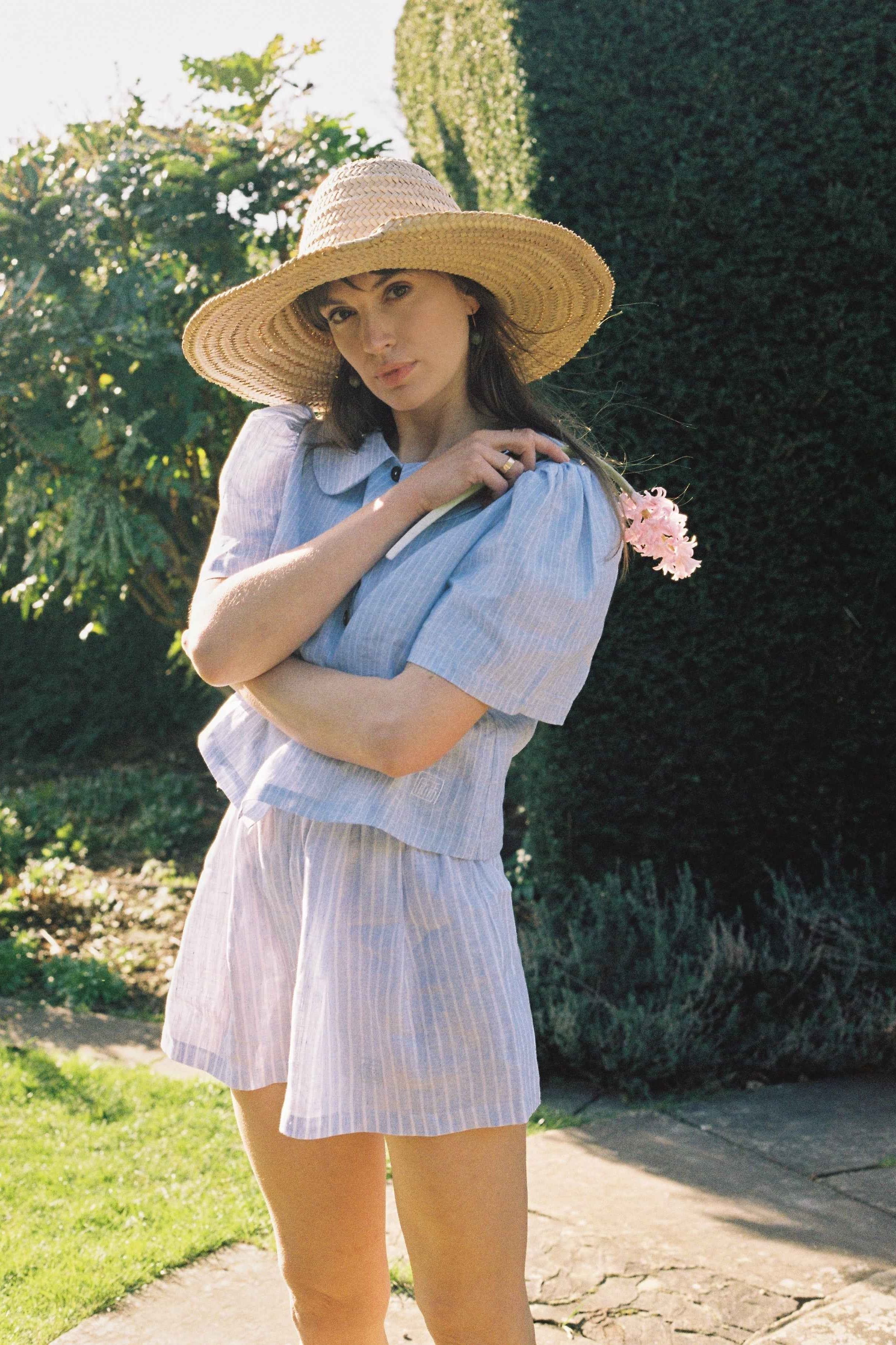
Every Woven garment is made from handwoven cloth in natural fibres. The looms used are pit or frame looms, worked entirely without electricity — a process that is slower, quieter, and infinitely more considered than industrial manufacture.
Most yarn is hand-spun, making the resulting fabric what is known as khadi — one of India's most storied textile traditions. A smaller proportion uses mill-spun yarn, producing what is called handloom cloth. Both share the same quality: because the yarn is handled by human hands throughout the weaving process, it is far less stressed and damaged than machine-made alternatives. The result is fabric that is naturally breathable, soft, and durable — cool in summer, warm in winter, and built to be worn for years.
Dyeing uses azo-free dyes, with a growing proportion of natural dyes, and the intention to move to 100% natural dyes in the near future. Garments are cut to minimise waste, with larger offcuts finding their way into children's or homeware pieces. Fastenings are kept to a minimum, and when used, sourced sustainably. Packaging is compostable and recycled, and shipping is handled via a carbon-positive freight company.
Why it matters
In a fashion landscape crowded with sustainability claims, Woven is something rarer: a brand whose entire reason for existing is the integrity of its supply chain. Laura didn't start with a gap in the market. She started with a community of extraordinary craftswomen, and asked how she could help their work reach more people — while making sure the people doing the work were the ones who benefited.
The clothing that results from that commitment is beautiful precisely because it is honest. There are no shortcuts in a handloom. Every centimetre of cloth takes time, attention and skill. You can feel it when you wear it.